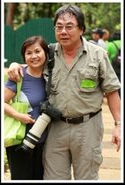
I had offered to treat my two daughters and their Johns (Ching and my son-in-law, John Valdezco and Kathy and her boyfriend, John Grimme) to a trip to Batanes, which my husband seconded. (A third daughter is starting work in Canada and cannot join us).
Kathy had booked the six of us (herself, myself and Ching and our 3 Johns) on Asian Spirit to go to Batanes in December. She told me that I would have to go to the Asian Spirit office myself if I wanted to take advantage of the 20% senior citizen’s discount, so I did. Kathy told me that she had asked about the airlines promo fares, and that the prices quoted us were the lowest.
When I approached the counter, I asked if they had loyalty or frequent flyer programs. She said no, but they had the “VIP” deal. What’s the VIP deal? She said that if I bought 5 tickets, the 6th was free, but that I had to choose between that or getting the senior citizen’s discount. Hmmm… should I go for the 20% discount on my ticket alone (I’m the only senior citizen in our group of six) or the 100% discount, if I counted myself as the 6th passenger? Did she have to ask? I saved more than P13, 000!
P.S. When Kathy called the airline, she asked for the frequency of flights, and the sales person answered, “We fly daily on Tuesday, Thursday, Saturday and Sunday.” When asked to compute the fares, he asked Kathy, “May I hold you for a moment?” and she answered, “I don’t think so. My boyfriend would not like that.”
Sunday, September 30, 2007


Friday, September 21, 2007
A Daughter's Independence
Do you sometimes feel that you know the exact moment when a milestone happens in your life? In 1981, on the first day that my eldest daughter entered a big school, I knew it was the beginning of the process of letting her go.
My eldest daughter was 4-1/2 years old when she entered St. Scholastica’s College as a prep student. She looked great in her blue and white uniform, carried her own school bag and lunch box without help from me, ready to face the challenges of grade school.
I joined the 40 or so parents (mostly mothers, some fathers) and nannies who were watching the class from outside the window of our children’s classroom, each of us just watching our own daughter or ward. Every now and then, the teacher would come out and ask us to please leave the children and wait at the designated waiting areas – which were far from the classroom.
It was like a dance, and we were moving to and fro. When the teacher got busy attending to the children – some of whom were crying and some did not want to be left in the classroom, we parents would inch our way to the windows, some even crowding at the doors. Then the teacher would shoo us away, and we would move away. At least, for a little while. Then one parent would dare move closer, positioning herself where the teacher would not see or notice her. If she succeeded, another parent would follow suit, and another. Then, the teacher would come out and talk to the parents, pleading with them to let the children settle down in class. At first, she would be reassuring, but later everyone could see that she was getting annoyed.
I was one of those parents tiptoeing back and forth until my daughter marched out of the room, and said to me in a reprimanding tone – “My teacher said you should wait there.” – pointing to a place several meters from her classroom. I think that was the first time that I felt my four-year old daughter was actually scolding ME, her mother.
It was at that precise moment that I knew that someday soon, she would no longer be mama’s little girl. My little daughter was ready for the big, wide world, and I knew I had to prepare myself to let her go. It was the day I learned to say goodbye. The day I knew she would succeed in life. I was a proud mother that day. I still am.
My eldest daughter was 4-1/2 years old when she entered St. Scholastica’s College as a prep student. She looked great in her blue and white uniform, carried her own school bag and lunch box without help from me, ready to face the challenges of grade school.
I joined the 40 or so parents (mostly mothers, some fathers) and nannies who were watching the class from outside the window of our children’s classroom, each of us just watching our own daughter or ward. Every now and then, the teacher would come out and ask us to please leave the children and wait at the designated waiting areas – which were far from the classroom.
It was like a dance, and we were moving to and fro. When the teacher got busy attending to the children – some of whom were crying and some did not want to be left in the classroom, we parents would inch our way to the windows, some even crowding at the doors. Then the teacher would shoo us away, and we would move away. At least, for a little while. Then one parent would dare move closer, positioning herself where the teacher would not see or notice her. If she succeeded, another parent would follow suit, and another. Then, the teacher would come out and talk to the parents, pleading with them to let the children settle down in class. At first, she would be reassuring, but later everyone could see that she was getting annoyed.
I was one of those parents tiptoeing back and forth until my daughter marched out of the room, and said to me in a reprimanding tone – “My teacher said you should wait there.” – pointing to a place several meters from her classroom. I think that was the first time that I felt my four-year old daughter was actually scolding ME, her mother.
It was at that precise moment that I knew that someday soon, she would no longer be mama’s little girl. My little daughter was ready for the big, wide world, and I knew I had to prepare myself to let her go. It was the day I learned to say goodbye. The day I knew she would succeed in life. I was a proud mother that day. I still am.
Saturday, September 01, 2007
Preventing Alzheimer's
I have learned that one way to delay memory loss is by doing mental games – crossword puzzles, Sudoku (the numbers game), or even playing chess. I was prepared to do that and had bought a chess set when my husband and I attended a seminar on Corel Painter – a software that allows one to convert photographs into what look like watercolor, pastel or oil paintings.
Except for MS Office and a little bit of IPhoto, I have stayed away from computer software, especially graphic applications, because my poor brain cannot tackle the complicated steps. So maybe, learning Painter is the right challenge for me.
Also, I need to decorate my house with paintings and since I run a photo studio, and my husband and daughter are both photographers, I did not think I would be right in buying and displaying real oil paintings or watercolor drawings. I wanted pictures with more personal connections to us. But to display photographs – especially since we are in advertising - would be like turning my home into a studio, and that is something I would not like to do. Looks like converting their images into photographic paintings would do the trick.
Today, I will try Corel Draw’s Painter. It looks like I have found a way to decorate my home as well as to exercise my brain to stave off or prevent Alzheimer’s.
Except for MS Office and a little bit of IPhoto, I have stayed away from computer software, especially graphic applications, because my poor brain cannot tackle the complicated steps. So maybe, learning Painter is the right challenge for me.
Also, I need to decorate my house with paintings and since I run a photo studio, and my husband and daughter are both photographers, I did not think I would be right in buying and displaying real oil paintings or watercolor drawings. I wanted pictures with more personal connections to us. But to display photographs – especially since we are in advertising - would be like turning my home into a studio, and that is something I would not like to do. Looks like converting their images into photographic paintings would do the trick.
Today, I will try Corel Draw’s Painter. It looks like I have found a way to decorate my home as well as to exercise my brain to stave off or prevent Alzheimer’s.
Monday, August 06, 2007
Teddy Ruxpin
Yesterday, a visit to Metro Manila’s newest mall, Trinoma, led to our discovery of the first Philippine store of Toys R Us. Although John and I are empty nesters, with three grown up daughters but without any grandchildren yet, we went inside the store to try and relive those days when our children were children.
Toys R Us has always been a big thing in our family. Every foreign trip would not be complete without a visit to a Toys R Us store. In 1986, when we traveled to the United States for the first time, we went to one in Los Angeles. It was exciting to be in such a huge store, with an overwhelming array of choices, but our budget was tight. We had picked out three different toys for our three daughters when we chanced upon a new toy – Teddy Ruxpin. He could talk! And move his mouth and eyes as he talked! Being the first animated toy, he was expensive. We simply could not afford him on top of the individual gifts we had already chosen for our girls. Sadly, we put him back on the shelf.
We went around the store looking at other toys but we could not get our minds off Teddy Ruxpin. We had really fallen in love with him. We thought, if we returned all the toys we’d carefully picked out for each of the girls – 10-year-old Ching Ching, 6-1/2 year old Anne Kay (now nicknamed Kathy) and 3-year-old Sacha, maybe we could afford to get Teddy Ruxpin. And maybe, the girls would not mind not having their own personal “pasalubong” if they had Teddy Ruxpin instead.
Teddy Ruxpin was such a hit with the girls that they did not mind sharing him among themselves. We agreed on the particular days when Teddy would be assigned to Ching Ching, Kathy or Sacha, but at unassigned times, they would have to co-own Teddy.
The sharing scheme worked well! In a way, it was a good thing that we could not afford three Teddy Ruxpins – one was all we needed to teach and learn about joint ownership, waiting for one’s turn, and sharing. Teddy Ruxpin may not have been intended to teach about sharing, but that’s what he taught us.
What memories going to a favorite toy store can bring!
Toys R Us has always been a big thing in our family. Every foreign trip would not be complete without a visit to a Toys R Us store. In 1986, when we traveled to the United States for the first time, we went to one in Los Angeles. It was exciting to be in such a huge store, with an overwhelming array of choices, but our budget was tight. We had picked out three different toys for our three daughters when we chanced upon a new toy – Teddy Ruxpin. He could talk! And move his mouth and eyes as he talked! Being the first animated toy, he was expensive. We simply could not afford him on top of the individual gifts we had already chosen for our girls. Sadly, we put him back on the shelf.
We went around the store looking at other toys but we could not get our minds off Teddy Ruxpin. We had really fallen in love with him. We thought, if we returned all the toys we’d carefully picked out for each of the girls – 10-year-old Ching Ching, 6-1/2 year old Anne Kay (now nicknamed Kathy) and 3-year-old Sacha, maybe we could afford to get Teddy Ruxpin. And maybe, the girls would not mind not having their own personal “pasalubong” if they had Teddy Ruxpin instead.
Teddy Ruxpin was such a hit with the girls that they did not mind sharing him among themselves. We agreed on the particular days when Teddy would be assigned to Ching Ching, Kathy or Sacha, but at unassigned times, they would have to co-own Teddy.
The sharing scheme worked well! In a way, it was a good thing that we could not afford three Teddy Ruxpins – one was all we needed to teach and learn about joint ownership, waiting for one’s turn, and sharing. Teddy Ruxpin may not have been intended to teach about sharing, but that’s what he taught us.
What memories going to a favorite toy store can bring!
Sunday, July 15, 2007
The Runaway Elephant
Last night, Dr. Romulo Bernardo and Tita Ming of the Manila Zoo came to visit us at our Alabang house, after they gave a bird-and-animal show at the Palm Country Club which is near us. Since animals are what they have in common with us (Kathy founded the MyZoo Volunteer Group Foundation while John still takes care of Mali, the female Asian elephant at the zoo), the conversation over Yellow Cab pizzas and San Mig Lites naturally focused on animal stories.
One of them was when an Asian elephant (not Mali) escaped and walked down Quezon City roads. It was a male Asian elephant, which was part of the Elephant Show near the Araneta Coliseum. It was musking, and could not be contained. Somehow, it got out of its enclosure and wanted to explore the city (I don’t blame him).
News traveled fast, and one of our friends who knew that John was doing volunteer work taking care of Mali, sms’ed me. His wife had called him to share the exciting news that she saw this huge elephant sauntering down Kamuning Street, going towards Tomas Morato (restaurant row). He called me because he didn’t have John’s number and because he thought that John would be the best person to know what to do. He told his wife that his friend, John Chua, was the elephant expert. I corrected him – John was not an expert on elephants. He was an expert on one – Mali.
John had a shoot, and could not be contacted, so I told Kathy so she could in turn inform the people at the zoo. Thankfully, the vets at the zoo had been informed, and one of them had rushed to the site. This was the first case of a runaway elephant for him (and for everyone), so there was a lot of excitement to go around, even for people from media.
Kathy called friends and contacts in zoos in three countries. She first called Johannesburg Zoo where she had previously done volunteer work, but they told her that they had no experience with Asian elephants. She remembered and called an Indian mahout at the Singapore Zoo (who also trained John at some time), but he preferred to refer her to a vet and elephant expert in Malaysia.
You would have to be here to listen to Kathy recount her phone conversations so you can join in the suspense as well as in the comedy. The Malaysian expert asked Kathy, “Describe the elephant,” and Kathy answered, “It’s big and grey.”
“I know what elephants look like. Tell me what it is doing.”
“It is tied to an Indian...” and realizing she was talking to an Indian, and didn’t know if he would be offended promptly corrected herself. “It is calm now and tied to a small tree.” He asked what tranquilizers were available and rattled off some scientific names. Kathy said no, and offered the names of what was available – which turned out to be tranquilizers for cats and dogs. Moving on, they finally found something suitable.
The local vet knew he had to tranquilize the elephant but he didn’t know with how much or with what. So, there was Kathy, without any degree in veterinary medicine, dictating names and dosages of tranquilizers to him. You can imagine that he was not very pleased, and very reluctant to follow Kathy’s instructions. But he probably had no choice, and somehow knew that Kathy’s information was coming from a foreign expert (Kathy lost no time in naming him and reciting his credentials).
The zoo had no tranquilizer gun, so he tied a big syringe to a pole (not a good idea but there was nothing better). He bravely approached the elephant – as far as the pole could separate him, and poked him, making sure his aim was on target. Then, he ran. Really fast. The fastest he ever ran. He knew the elephant would not be happy, and he had to be away, at least until the elephant was fully sedated.
Kathy told us that the right way was to sedate the elephant so it would be groggy , but not asleep. Then, it could be led to the truck. But it was given a bit too much (there was no time or opportunity to weigh the elephant to see how much would be the right dose) and the elephant went to sleep, and therefore had to be lifted to the truck. In the process, the harness broke, and the elephant fell on a taxi that was following the truck.
The taxi was the only casualty. Fortunately, nobody was hurt, and the elephant was successfully returned to its enclosure. They soon thereafter closed the Elephant Show, and returned the entire herd to Thailand, where they originally came from. I hope going home was a happy ending for the elephants in this story.
Since our visitors share our love for animals, we had a really pleasant evening, and swapped many animal stories. I hope I can write all the stories told so that they can be shared with you.
One of them was when an Asian elephant (not Mali) escaped and walked down Quezon City roads. It was a male Asian elephant, which was part of the Elephant Show near the Araneta Coliseum. It was musking, and could not be contained. Somehow, it got out of its enclosure and wanted to explore the city (I don’t blame him).
News traveled fast, and one of our friends who knew that John was doing volunteer work taking care of Mali, sms’ed me. His wife had called him to share the exciting news that she saw this huge elephant sauntering down Kamuning Street, going towards Tomas Morato (restaurant row). He called me because he didn’t have John’s number and because he thought that John would be the best person to know what to do. He told his wife that his friend, John Chua, was the elephant expert. I corrected him – John was not an expert on elephants. He was an expert on one – Mali.
John had a shoot, and could not be contacted, so I told Kathy so she could in turn inform the people at the zoo. Thankfully, the vets at the zoo had been informed, and one of them had rushed to the site. This was the first case of a runaway elephant for him (and for everyone), so there was a lot of excitement to go around, even for people from media.
Kathy called friends and contacts in zoos in three countries. She first called Johannesburg Zoo where she had previously done volunteer work, but they told her that they had no experience with Asian elephants. She remembered and called an Indian mahout at the Singapore Zoo (who also trained John at some time), but he preferred to refer her to a vet and elephant expert in Malaysia.
You would have to be here to listen to Kathy recount her phone conversations so you can join in the suspense as well as in the comedy. The Malaysian expert asked Kathy, “Describe the elephant,” and Kathy answered, “It’s big and grey.”
“I know what elephants look like. Tell me what it is doing.”
“It is tied to an Indian...” and realizing she was talking to an Indian, and didn’t know if he would be offended promptly corrected herself. “It is calm now and tied to a small tree.” He asked what tranquilizers were available and rattled off some scientific names. Kathy said no, and offered the names of what was available – which turned out to be tranquilizers for cats and dogs. Moving on, they finally found something suitable.
The local vet knew he had to tranquilize the elephant but he didn’t know with how much or with what. So, there was Kathy, without any degree in veterinary medicine, dictating names and dosages of tranquilizers to him. You can imagine that he was not very pleased, and very reluctant to follow Kathy’s instructions. But he probably had no choice, and somehow knew that Kathy’s information was coming from a foreign expert (Kathy lost no time in naming him and reciting his credentials).
The zoo had no tranquilizer gun, so he tied a big syringe to a pole (not a good idea but there was nothing better). He bravely approached the elephant – as far as the pole could separate him, and poked him, making sure his aim was on target. Then, he ran. Really fast. The fastest he ever ran. He knew the elephant would not be happy, and he had to be away, at least until the elephant was fully sedated.
Kathy told us that the right way was to sedate the elephant so it would be groggy , but not asleep. Then, it could be led to the truck. But it was given a bit too much (there was no time or opportunity to weigh the elephant to see how much would be the right dose) and the elephant went to sleep, and therefore had to be lifted to the truck. In the process, the harness broke, and the elephant fell on a taxi that was following the truck.
The taxi was the only casualty. Fortunately, nobody was hurt, and the elephant was successfully returned to its enclosure. They soon thereafter closed the Elephant Show, and returned the entire herd to Thailand, where they originally came from. I hope going home was a happy ending for the elephants in this story.
Since our visitors share our love for animals, we had a really pleasant evening, and swapped many animal stories. I hope I can write all the stories told so that they can be shared with you.
Friday, July 06, 2007
Here's One of Those Aerial Photos

We found at least one aerial photo of Banaue, and still need to look for one of the Hundred Islands. This photo was taken in 1976 or 1977.
Copyright/Photography by John K. Chua. All Rights Reserved.
Short Ride, Long Drive

Once upon a time, John was in Banaue to take pictures – not for any client, but just for himself. He drove eight hours in his yellow Ford Fiera (see photo with our Adphoto staff in the late 70’s – we all looked very young!) and was busy photographing Ifugaos on the rice terraces when he saw a helicopter land on the parking lot of Banaue Hotel (the only place where it could land). Two sounds are music to John’s ears - the click, click, click of his camera and the sound of a helicopter propeller whirling. Hearing them both at the same time was like heaven to him, and he was ecstatic.
He ran to chat with the pilot, who volunteered the information that he had room for one more passenger. Like an eager child, John asked him, “Can I come? Can I come? Please, please, Can I come?” The pilot was ferrying some foreign guests and would be flying back to Manila through Baguio that same day. “Sure, hop on,” said the pilot to the photographer, and away they flew. They flew low so John could take photos of the Banaue rice terraces and the Ifugao villages, the geometric rice paddies and thick pine tree forests of Mountain Province and the vegetable and flower terraces of Benguet. They made a stop over in Poro Point, La Union to refuel, and continued on to fly over scenic Hundred Islands in Pangasinan and over the rice fields of Pampanga and Bulacan and back to Villamor Air Base, in Metro Manila. John clicked away with his camera, loading roll after roll of film.
The flight took just slightly over two hours, but John still needed to go back to Banaue. His clothes and vehicle were still there. As soon as he hit Metro Manila, John immediately grabbed a cab and asked to be taken to the Pantranco Station in Quezon City, so he could have a bumpy ride on a non-aircon bus (that’s all there was then) all the way back to Banaue.
His yellow Ford Fiera was still parked where he left it. He gathered his clothes and threw his bag into the Fiera. He grinned ear-to-ear, and whistled happily while driving alone all the way from Banaue through Nueva Vizcaya, Nueva Ecija, Bulacan, Metro Manila and finally to his home in Makati – over eight hours to travel 350 kilometers. 700 kilometers of road travel and I don't know how many air miles in less than 24 hours!
His take from this joyride? Priceless photographs to show a bird’s eye view of the Ifugao rice terraces and Hundred Islands.
(Note: Our archivist is still looking for those vintage aerial shots).
A lesson to be learned: Scan those film images now before they fade away.
Wednesday, June 13, 2007
"I'll Take the First Circus"
I suppose that every family has “in” expressions, mottos or slogans in much the same way that they have “in” jokes. While you may hear only a phrase -the family knows the entire story behind those few words.
For our family, we all understand and get inspired by this expression, “I’ll take the first circus.”
It came from an anecdote that my husband and I read in the Readers’ Digest about a little girl in a town soon to be visited by three circuses. Her father explained to her that the family was not financially able to take her to all three circuses and could take her only to one. The first circus would be just a small one, while the third would be the best and biggest, and presumably the most expensive. “I’ll take the first circus,” she said, and so her parents took her to the first. A few months later, when the second circus came, the family’s finances had improved and they were able to take her to the second. And finally, they found that they could afford to get tickets to the third and most expensive circus.
In 1989, my husband had a photography assignment in Germany. It was going to be his first trip to Europe. While he was there, I faxed him that I could go when his job was finished so he and I could travel together. We had very little money so he said that maybe it would be better to wait for another time when we could afford to visit other European countries as well. Pleading, I faxed him again “I’ll take the first circus.” Remembering the story, he said yes!
Like the little girl who chose to take the first circus, I have managed to go to Europe three times - to Germany and France in 1989, then again in 1992 (six countries) with my eldest daughter, and in 1996, in a trip with the entire family – my husband and three young daughters.
In our family, a prospect of limited opportunity will not be turned down. Instead, you will hear us say, “I’ll take the first circus.”
For our family, we all understand and get inspired by this expression, “I’ll take the first circus.”
It came from an anecdote that my husband and I read in the Readers’ Digest about a little girl in a town soon to be visited by three circuses. Her father explained to her that the family was not financially able to take her to all three circuses and could take her only to one. The first circus would be just a small one, while the third would be the best and biggest, and presumably the most expensive. “I’ll take the first circus,” she said, and so her parents took her to the first. A few months later, when the second circus came, the family’s finances had improved and they were able to take her to the second. And finally, they found that they could afford to get tickets to the third and most expensive circus.
In 1989, my husband had a photography assignment in Germany. It was going to be his first trip to Europe. While he was there, I faxed him that I could go when his job was finished so he and I could travel together. We had very little money so he said that maybe it would be better to wait for another time when we could afford to visit other European countries as well. Pleading, I faxed him again “I’ll take the first circus.” Remembering the story, he said yes!
Like the little girl who chose to take the first circus, I have managed to go to Europe three times - to Germany and France in 1989, then again in 1992 (six countries) with my eldest daughter, and in 1996, in a trip with the entire family – my husband and three young daughters.
In our family, a prospect of limited opportunity will not be turned down. Instead, you will hear us say, “I’ll take the first circus.”
Friday, June 08, 2007
"Kitchen Table Wisdom: Stories That Heal"
It's a New York Times bestseller by Rachel Naomi Remen M.D. It is one of the most inspiring books I have ever read, and should make a great gift to family and friends. I've already given a copy to a medical student whom I know, and I will get a few more copies to give to doctor-friends. I think it should be required reading for all doctors, nurses and caregivers no matter how long they have been practicing. The lessons, truths and insights contained in the stories that she shares are not only for those in the medical profession, but for anyone who calls himself or herself "human."
Tuesday, May 22, 2007
Monday, May 21, 2007
Love in a "Pan"
In the 70’s when John and I were courting, one of our favorite restaurants was Casa Marcos, which specialized in Spanish food. Our favorite dish was called “Pan de San Isidro,” a Spanish version of Cordon Bleu. A thick slice of cheese and ham are wrapped in a thin slice of veal, breaded and deep-fried. Since I was a light eater, John and I usually shared one order.
One evening, I was home (home then was an apartment owned by my parents that I was sharing with my younger brother) when the doorbell rang. At the door was one of John’s mother’s employees, an all-around helper whom John occasionally borrows as his driver or messenger. (His name was “Tabâ” because he was very overweight). He handed me a paper bag, with something wrapped in aluminum foil. Since it was still warm, I guessed what it was – Pan de San Isidro! How sweet of him! Thinking of John but not of my brother, I decided to send John half of the Pan. I asked Tabâ to wait while I divided the dish into two. I sent half back to John, with a thank you note.
The following day when I saw John (I didn’t have a phone at home and this was decades before the advent of cellphones), he wasn’t smiling. He appeared aloof and didn’t seem glad to see me, and of course, I wondered why. When finally I was able to coax him to talk to me, he said that he was very disappointed that I sent him half of the Pan. This was perplexing, as I thought he would be glad that I did.
He went on to explain that he went through a lot of trouble to surprise me with the Pan. The night before, he personally went to Casa Marcos and pleaded with the restaurant manager to allow him to talk with the cook. After he explained what he was planning to do, he was allowed to go inside the kitchen. John handed him a love letter that he had written, asked him to wrap it in foil, and to insert it between the ham and cheese. He told me that both the manager and the cook, and even the waiters, were thrilled to be part of this romantic conspiracy. While he was waiting for the Pan to be ready, they were all trying to guess how I would react. They were also challenging each other to think of ways to surprise their own wives or girlfriends. He left Casa Marcos with a big grin on his face.
But that night, when he ate the half of the Pan that Tabâ handed him, he found his foil-wrapped love letter in the portion I sent back to him. He was very disappointed, to say the least. While he knew that I had no way of knowing what I missed, still, he said, it was such a let down. All that effort was for naught, he said, and I said no, not for naught. I thanked him for what he did, and apologized for sending him back half of the Pan de San Isidro.
P.S. Since the element of surprise had been lost, John didn’t want to give me that love letter anymore. I wasn’t, but he was also too embarrassed to take me again to that branch of Casa Marcos, so we dined at their other branches instead. Casa Marcos closed down a few years ago.
One evening, I was home (home then was an apartment owned by my parents that I was sharing with my younger brother) when the doorbell rang. At the door was one of John’s mother’s employees, an all-around helper whom John occasionally borrows as his driver or messenger. (His name was “Tabâ” because he was very overweight). He handed me a paper bag, with something wrapped in aluminum foil. Since it was still warm, I guessed what it was – Pan de San Isidro! How sweet of him! Thinking of John but not of my brother, I decided to send John half of the Pan. I asked Tabâ to wait while I divided the dish into two. I sent half back to John, with a thank you note.
The following day when I saw John (I didn’t have a phone at home and this was decades before the advent of cellphones), he wasn’t smiling. He appeared aloof and didn’t seem glad to see me, and of course, I wondered why. When finally I was able to coax him to talk to me, he said that he was very disappointed that I sent him half of the Pan. This was perplexing, as I thought he would be glad that I did.
He went on to explain that he went through a lot of trouble to surprise me with the Pan. The night before, he personally went to Casa Marcos and pleaded with the restaurant manager to allow him to talk with the cook. After he explained what he was planning to do, he was allowed to go inside the kitchen. John handed him a love letter that he had written, asked him to wrap it in foil, and to insert it between the ham and cheese. He told me that both the manager and the cook, and even the waiters, were thrilled to be part of this romantic conspiracy. While he was waiting for the Pan to be ready, they were all trying to guess how I would react. They were also challenging each other to think of ways to surprise their own wives or girlfriends. He left Casa Marcos with a big grin on his face.
But that night, when he ate the half of the Pan that Tabâ handed him, he found his foil-wrapped love letter in the portion I sent back to him. He was very disappointed, to say the least. While he knew that I had no way of knowing what I missed, still, he said, it was such a let down. All that effort was for naught, he said, and I said no, not for naught. I thanked him for what he did, and apologized for sending him back half of the Pan de San Isidro.
P.S. Since the element of surprise had been lost, John didn’t want to give me that love letter anymore. I wasn’t, but he was also too embarrassed to take me again to that branch of Casa Marcos, so we dined at their other branches instead. Casa Marcos closed down a few years ago.
Sunday, May 13, 2007
Tulips on Mothers' Day


The beautiful bouquet of yellow and yellow-orange tulips came on a Friday, a full two days before Mothers’ Day, which is celebrated, annually, on the second Sunday of May.
It created quite a stir in the office, as the staff thought that the flowers came all the way from Holland. They know that Kathy’s boyfriend is Dutch and it was easy to assume that the flowers were flown in from Europe. Well, in a way, they were, (they must have been imported from the Netherlands) but they were arranged and delivered here by our favorite florist. It seems Kathy and her boyfriend, John, went to see Gina de Guzman of Petals Galore months ago when he was still here.
I took the bouquet to the other studio where Kathy was working overtime with her dad. The clients (Campaigns & Grey) who were at the studio for the car shoot thought the same way as the staff, and were told about the special arrangement with the florist.
Kathy wanted to take photos of the flowers but had to wait until the next morning since she and her dad didn’t get to finish work until past midnight. After taking photos of them in the studio, she took the flowers to our house in Alabang, so she could take photos of the tulips with a pair of Dutch wooden clogs that she got from her John on her birthday (March 3).
So now, photography has made it possible for those beautiful flowers to be immortalized. Long after the fresh tulips are gone, we can still look at Kathy’s photo of those beautiful yellow and yellow-orange flowers, and be reminded of today’s Mothers’ Day when I received that beautiful bouquet.
P.S. Kathy researched on tulips and found out that the yellow ones are called Yokohama tulips while the orange ones with yellow edges are called Kees Nellis.
Sunday, May 06, 2007
Writing Exercise: "Hear/Listen"
Every Saturday, I attend a writing class with Barbara Gonzalez, a Philippine Star columnist whose writings I admire. Our exercise for this Saturday was to pick a pair of words and to write something using those words. To encourage us to write poetry, she said to write without worrying about rhyme, cadence, stanzas etc. Just write the two words, and “cluster” around those two words. So, here’s one of my first attempts at writing a poem. I chose the words “hear/listen.”
We are in love.
You love me, I love you
We listen with pure ecstasy
As we hear our hearts beat as one.
Sometimes we only give a hint
Sometimes not even
We understand and feel as one
And words need not be spoken.
Your eyes speak, my eyes listen
Your arms speak, my arms listen
Your body speaks, my body listens
Your heart speaks, my heart listens
In the deepest recesses of our souls
To each other, we listen.
But, sadly, years pass,
Somehow love passes, too.
We speak words, we wail and cry
But wounded hearts do not listen.
We hear the sobs of anguish and pain
We hear the doubt and disbelief
We hear the silence between us
But our hearts no longer listen.
Will love come again?
I put my ears to the ground
I raise my ears to all around
I strain to hear you above the noise and din.
Hush, I hear a tiny whisper
Reaching out through time and space
Across loneliness of yesteryears
Our hearts striving to listen, not just hear.
We can love each other again
Lost love can be regained
Our hearts will teach us how
Once more, to hear and listen.
We will listen with ecstasy
From now till we breathe our last breath
We will hear our hearts beat as one
Each day, each moment, until death.
We are in love.
You love me, I love you
We listen with pure ecstasy
As we hear our hearts beat as one.
Sometimes we only give a hint
Sometimes not even
We understand and feel as one
And words need not be spoken.
Your eyes speak, my eyes listen
Your arms speak, my arms listen
Your body speaks, my body listens
Your heart speaks, my heart listens
In the deepest recesses of our souls
To each other, we listen.
But, sadly, years pass,
Somehow love passes, too.
We speak words, we wail and cry
But wounded hearts do not listen.
We hear the sobs of anguish and pain
We hear the doubt and disbelief
We hear the silence between us
But our hearts no longer listen.
Will love come again?
I put my ears to the ground
I raise my ears to all around
I strain to hear you above the noise and din.
Hush, I hear a tiny whisper
Reaching out through time and space
Across loneliness of yesteryears
Our hearts striving to listen, not just hear.
We can love each other again
Lost love can be regained
Our hearts will teach us how
Once more, to hear and listen.
We will listen with ecstasy
From now till we breathe our last breath
We will hear our hearts beat as one
Each day, each moment, until death.
Saturday, April 21, 2007
My Paternal Grandmother
I’m trying to remember whatever I could of my grandmother, but I do not have much to go by.
My father’s mother’s name was Liberata Santos. Although she lived to be 85, and I was already in college when she died, I had very scant memories of her, of which very little was based on my own personal experience with her. Most of the stories that I heard about my grandmother were from my aunt and my cousins, with whom she lived, in the big house next to ours.
I do remember that before I started going to grade school, I would go with her to help her peddle fresh fish that she carried on a bilao on her head. Usually, we would not go far, as she had her “suki” (regular patrons) in Don Galo, especially the Pulo area, who regularly bought from her, fish and sometimes some tomatoes, kangkong and labanos for making sinigang. I would be her only grandchild who was available to accompany her as all my cousins were going to school, while my sister and another brother were too young. My older brother was not someone she counted on, and in those days, probably not someone expected to help.
I do remember her long white hair that she regularly treated with coconut oil. She would get the coconut milk (derived by squeezing grated coconut meat) from the maid or her loyal houseboy, Polonio, but would cook it herself to extract the oil. The coconut while being cooked this way was very aromatic, but what we would wait for was the brown “latik” that was formed when coconut milk was cooked. That was delicious. She would transfer the coconut oil to a small bottle and wait for it to cool, and then apply it to her hair. Her straight white hair reached almost her knees, but since she was shorter than 4’10”, that wasn’t too long. She was a bit plump and very fair. Although she spoke a little Spanish (just the prayers and the cusswords), it was obvious from her facial features that she was not Spanish.
For reasons I never got to find out, we addressed and referred to her, not as “Lola” which is the common way, but as “Grandmother” (pronounced the Filipino way – granmader). Her younger relatives called her "Lola" or "Nanang Berata."
I do remember that she was diabetic, and she used to “steal” spoonfuls of sugar from the sugar container, which was kept in my aunt’s trusty GE refrigerator. When caught in the act, she would fight off my cousins who would try to take away the sugar from her. In the physical struggle over a spoonful of sugar, she would always lose, as my cousins were taller and stronger, but that would not stop her from cursing them and her illness, in a flurry of Tagalog and Spanish expletives. Soon, she developed a gangrenous toe that would not heal, and when that was amputated, she finally acquiesced to not having sugar.
When she was too old and sick to sell fish, she kept herself busy by sweeping their front yard with a walis tingting, and sometimes, squatting alongside the asphalted main street (there were no concrete sidewalks then) to arrange the pebbles and stones on the ground. She did not find television (then in its early days – black and white, no remote control, and only two or three channels) entertaining, but would try reading newspapers in English, by syllabicating the words, as English was not a language she knew.
I remember the stories about her because my cousins often teased her about them. She was 16 when she first got married, and had a daughter, my aunt, Kakang Salud (Salud Gutierrez), before she was widowed at age 20. At 24, she married a widower, my grandfather Alejandro Valentino, who had one daughter, Kakang Floring (Florencia Valentino). Lolo Andoy was a cochero. Their union produced my father, Ruperto (“Peting”), but it was, again, a short-lived marriage. At 28 she was widowed for the second time and never remarried. She continued to take care of the three children, two of her own, and her stepdaughter from her second husband.
Although I never saw her wear them, I did get some occasions of seeing her bring out her baro’t saya with matching panuelo. She must have valued those clothes, or why would she keep them when she had no more use for them?
At six o’clock every evening, she prayed the rosary, in Tagalog, and some prayers in Spanish, before an image of Our Lady of the Immaculate Conception, which she kept in an altar in her room. After my grandmother died, this antique image of the Virgin Mary, about sixteen inches in height and encased in glass because she was dressed in a beautifully beaded white and blue dress and made valuable by her ivory hands and face, was transferred to the main altar of my aunt’s house. It was treasured as a family relic from my grandmother.
My “granmader” died in her sleep, in 1966 at the age of 85. I was 20 years old then.
I never thought of keeping a picture of my grandmother, but last week when I visited my cousins, I asked if they were able to save any pictures of her. Unfortunately, a fire gutted my cousins’ house and my parents’ house a few years ago, and nothing was saved – not any photos, not her “baro’t saya” and “panuelos,” and not the image of the Blessed Virgin Mary of the Immaculate Conception, which was her most prized possession.
Deprived of any physical reminders, I would just have to keep an image of her in my mind, and hope that this story would help introduce my grandmother to my children, especially when I get too old to remember correctly.
My father’s mother’s name was Liberata Santos. Although she lived to be 85, and I was already in college when she died, I had very scant memories of her, of which very little was based on my own personal experience with her. Most of the stories that I heard about my grandmother were from my aunt and my cousins, with whom she lived, in the big house next to ours.
I do remember that before I started going to grade school, I would go with her to help her peddle fresh fish that she carried on a bilao on her head. Usually, we would not go far, as she had her “suki” (regular patrons) in Don Galo, especially the Pulo area, who regularly bought from her, fish and sometimes some tomatoes, kangkong and labanos for making sinigang. I would be her only grandchild who was available to accompany her as all my cousins were going to school, while my sister and another brother were too young. My older brother was not someone she counted on, and in those days, probably not someone expected to help.
I do remember her long white hair that she regularly treated with coconut oil. She would get the coconut milk (derived by squeezing grated coconut meat) from the maid or her loyal houseboy, Polonio, but would cook it herself to extract the oil. The coconut while being cooked this way was very aromatic, but what we would wait for was the brown “latik” that was formed when coconut milk was cooked. That was delicious. She would transfer the coconut oil to a small bottle and wait for it to cool, and then apply it to her hair. Her straight white hair reached almost her knees, but since she was shorter than 4’10”, that wasn’t too long. She was a bit plump and very fair. Although she spoke a little Spanish (just the prayers and the cusswords), it was obvious from her facial features that she was not Spanish.
For reasons I never got to find out, we addressed and referred to her, not as “Lola” which is the common way, but as “Grandmother” (pronounced the Filipino way – granmader). Her younger relatives called her "Lola" or "Nanang Berata."
I do remember that she was diabetic, and she used to “steal” spoonfuls of sugar from the sugar container, which was kept in my aunt’s trusty GE refrigerator. When caught in the act, she would fight off my cousins who would try to take away the sugar from her. In the physical struggle over a spoonful of sugar, she would always lose, as my cousins were taller and stronger, but that would not stop her from cursing them and her illness, in a flurry of Tagalog and Spanish expletives. Soon, she developed a gangrenous toe that would not heal, and when that was amputated, she finally acquiesced to not having sugar.
When she was too old and sick to sell fish, she kept herself busy by sweeping their front yard with a walis tingting, and sometimes, squatting alongside the asphalted main street (there were no concrete sidewalks then) to arrange the pebbles and stones on the ground. She did not find television (then in its early days – black and white, no remote control, and only two or three channels) entertaining, but would try reading newspapers in English, by syllabicating the words, as English was not a language she knew.
I remember the stories about her because my cousins often teased her about them. She was 16 when she first got married, and had a daughter, my aunt, Kakang Salud (Salud Gutierrez), before she was widowed at age 20. At 24, she married a widower, my grandfather Alejandro Valentino, who had one daughter, Kakang Floring (Florencia Valentino). Lolo Andoy was a cochero. Their union produced my father, Ruperto (“Peting”), but it was, again, a short-lived marriage. At 28 she was widowed for the second time and never remarried. She continued to take care of the three children, two of her own, and her stepdaughter from her second husband.
Although I never saw her wear them, I did get some occasions of seeing her bring out her baro’t saya with matching panuelo. She must have valued those clothes, or why would she keep them when she had no more use for them?
At six o’clock every evening, she prayed the rosary, in Tagalog, and some prayers in Spanish, before an image of Our Lady of the Immaculate Conception, which she kept in an altar in her room. After my grandmother died, this antique image of the Virgin Mary, about sixteen inches in height and encased in glass because she was dressed in a beautifully beaded white and blue dress and made valuable by her ivory hands and face, was transferred to the main altar of my aunt’s house. It was treasured as a family relic from my grandmother.
My “granmader” died in her sleep, in 1966 at the age of 85. I was 20 years old then.
I never thought of keeping a picture of my grandmother, but last week when I visited my cousins, I asked if they were able to save any pictures of her. Unfortunately, a fire gutted my cousins’ house and my parents’ house a few years ago, and nothing was saved – not any photos, not her “baro’t saya” and “panuelos,” and not the image of the Blessed Virgin Mary of the Immaculate Conception, which was her most prized possession.
Deprived of any physical reminders, I would just have to keep an image of her in my mind, and hope that this story would help introduce my grandmother to my children, especially when I get too old to remember correctly.
Sunday, April 15, 2007
My Maternal Grandmother

My maternal grandmother, Matilde Jimenez, was born on March 14, 1905. Her children called her “Inang” (a derivative from the word “ina” which, in Tagalog, means mother) while her grandchildren called her “Inang Tilde.” Her youngest daughter was only eleven months old when her husband, Antonio (or Antonino, but nicknamed “Meno”) Lombos, a caretela driver, died in 1936 of a ruptured appendix, while playing football. For information on my maternal grandparents, I can only ask my only living aunt, Tia Remie and uncle, Kuyang Ben.
Of the little that I actually remember, I know that I was fond of her, and she of me.
I always remembered her to be a hardworking person, selling rice and pan de sal in order to support herself and her five children, my mother Dolores, and her siblings, Felicisima, Ricardo, Benjamin and Remedios. She maintained her own household, with her then unmarried children. Her only brother, Melquiades (Quiades), could not help her much as he earned very little as a taxi driver and had his own family - a wife and six children - to support. While she died at 55, her younger brother died only recently, in his 90’s.
When I was in first grade, she had a sari-sari store situated on her brother’s property, which faced an “eskenita” (alley). My school, the Don Galo Elementary School, which was a few blocks away, and her house were on the same side of the main street-, which as a child I was not allowed to cross - so I could go to her store on my own after class. It was there where my parents would pick me up later in the day as soon as they had time to fetch me. I remember that she would offer me a Coke and whatever bread or candy was available in her store. One of my favorites was a wafer - similar to a Chinese fortune cookie - that had tiny toys inside, including rings that I could put on my little finger. She generously gave me rubber bands and “peks” which I used as toys when playing with the neighborhood children.
For some reason that I never knew, she gave up that store, and instead started selling pan de sal, pan bonete (similar to pan de sal) and rice from her house. My job was to use a wide, flat wooden stick to keep each variety of rice in a neat pyramidal shape apart from the other rice varieties (Milagrosa, Wagwag), which were displayed in the other compartments. There were three such compartments in one big six-legged rectangular box, with sometimes a fourth compartment for mongo. I would help measure the rice to sell, using a scooper that looked like a gallon can of paint sliced diagonally, with a wooden handle at the center of the closed, flat bottom part. The scooped rice was placed in a wooden box called the “salop,” which was open on one side where rice grains were poured. The flat wooden stick was smooth with age and frequent use, and had a rich patina, and I liked caressing it with my hand, like a sword that would not cut, but could swipe away across the top of the salop all rice in excess of the intended measure. Rice used to be sold by the salop, or “kalahating-salop” (1/2) until the government required that rice be sold by weight.
A dress that she gave me has not survived the years, but its memory has. My grandmother was very proud that I was finishing my third grade school year with honors. Although only the top three honor students were called to the stage (as first honorable mention, I was fourth) she took delight in the fact that her first granddaughter (I have a brother older than I) showed promise. As a gift, she gave me a dress. That was very special because in those days, I would receive new dresses only on two occasions a year – Christmas and my birthday – sometimes not even.
I remember it vividly. It was a maroon dress, with small black-checkered design, with a round neck, without a collar, and with covered buttons at the back opening. The neck and armholes were decorated with tiny “C” piping made from the same cloth, sewn in half-moon fashion, one by one, like scallops. The skirt part was sheared, and had a pocket on the right side, the top of which had the same scallop accent.
It was the practice in those days, especially when one is poor, to buy larger clothes and shoes for children so that they would not out-grow them before they got worn out. Since I had few clothes, and it was my favorite, the top got worn out right away. My mother knew how to sew, and so did my grandmother, so one of them replaced the top and sewed it to the old skirt, loosening and lengthening where needed. After a couple of years, the top was still okay but the skirt needed replacing, and it was replaced. Technically, did I get a new dress?
When I was in high school, my grandmother became very sick. This was the first time that I heard about cancer, an illness that would befall at least three members of my mother’s family, including my own mother. My grandmother had breast cancer, and could not afford whatever therapy was available in those days. They could not even afford to give her painkillers. In December 1959, I knew she was dying. Instead of celebrating the season, my mother and her siblings would be huddled with their dying mother in a dark and stuffy room, where she lay writhing in pain on a banig on the floor. I would hear my mother and especially my youngest aunt cry along with my grandmother when she was in pain, but I was afraid to disturb them and stayed outside the door to her room. I prayed fervently that my beloved grandmother would not die during the Christmas season and begged for God’s mercy to let us still have her until after the holidays. When she died on January 7, a day after the Feast of the Three Kings, which then marked the end of the Christmas season, I worried that maybe I had offered her to God sooner than God would have wanted to take her. It was also then that I learned that my youngest aunt’s birthday was on January 8, and I was filled with remorse for not asking for a longer reprieve for my grandmother. It was the first time that I felt the terrible pain of separation that death brings.
My grandmother’s life on earth was brief, but I remember her fondly.
Saturday, April 14, 2007
Teaching the Love of Reading
1. Share reading time with the people you love.
When my children were still babies, toddlers or in preschool, and occasionally, when they were in early grade school, I would put them on my lap to read to them. It was still fun to do even when they could read on their own. Now, they’re all grown up and they’re voracious readers. My husband theorizes that maybe the warm and fuzzy feeling of their being close to my body when they were young had become associated with reading, and while they no longer sit on my lap -the eldest is 30 and the youngest is 23 - ;), the association remains, albeit unconsciously. Unfortunately, my husband and I were at our busiest at work when our second daughter was growing up, and we did not get to spend as much time to read with her. It is sad but no wonder that she did not take to reading as much as the two other daughters did, but she caught up with it on her own later (more on this later).
If you are just going to start with reading together when your children are too old to sit on your lap, try sitting next to each other and reading the same book. I think that as long as you are still physically bigger than they are (say, they’re 7, 8 or 9 or a even bit older), you can still put your arms around them so you can look at a book together.
At times, I could be in bed with a book in my hand and my husband a few paces away, working at his hobby table, and I would try reading some passages from the book that I was reading – at one time it was John Grey’s “Men are from Mars, Women are from Venus, at other times some snippets of stories from Readers Digest – with him, and we would share a laugh - which goes to prove that no one is too old for sharing the love of reading.
Spend time reading together. Usually, this is before bedtime, although it could be anytime. I remember that before my children learned to read on their own, they would ask me to read book after book after book to them. Since I dramatized the reading (changing voices for each character in the story), it was fun but tiring, and my jaw would hurt from reading so much, but my heart was full.
2. Get books that your children are interested in.
As I mentioned earlier, one of our daughters did not readily take to books, until we discovered when she was two years old, that she had this fascination for horses, and at bookstores, she would pick out books that had pictures of horses in them, especially if the pictures were on the book covers. It was the same with the toys that she would ask us to buy for her. Although I could not explain where this fascination came from, I latched on to that and bought all the children’s books on horses, or containing stories about horses. Until recently, she remained in love with horses, and we keep buying her books on horses.
Find out what your children (or spouse) are interested in – mystery, airplanes, dinosaurs, football, cooking – anything at all, and make books on them available in your home. The beauty of books is that there is something on everything for everybody.
3. When reading is really difficult, ease them into reading.
When they were in high school, they all seemed to have trouble reading in Pilipino, especially Philippine literature. One of their teachers suggested taking them to watch movie and play versions of the Rizal novels that they were supposed to be studying, so that they could get the plot, meet the characters and have an overall feel of the stories without having to struggle with learning all that while reading in a language they were not at home with. I also looked for comic books (the same way I found cartoon books on statistics or physics), and looked for book versions of Noli Me Tangere and El Filibusterismo that had better, more readable fonts. (I do not understand why publishers insist on using archaic fonts). In short, I wanted to make reading easy and pleasurable.
When they were older, I learned that there are different learning styles, among them the visual and auditory ways. One of my daughters prefers auditory books (cassettes, CDs, DVDs), and we said, by all means. Now, she seems to be picking up a few books for her own reading pleasure, or for learning (her current interest is anything and everything about the Netherlands, as her boyfriend is Dutch).
-
Reading is fun. For me, I can pick up instant information by going to the internet, but I can’t get from the internet the same wonderful, warm and fuzzy feeling that I get by sitting on a comfortable sofa, propped up by soft pillows or snuggling with someone I love with a book of my choice.
When my children were still babies, toddlers or in preschool, and occasionally, when they were in early grade school, I would put them on my lap to read to them. It was still fun to do even when they could read on their own. Now, they’re all grown up and they’re voracious readers. My husband theorizes that maybe the warm and fuzzy feeling of their being close to my body when they were young had become associated with reading, and while they no longer sit on my lap -the eldest is 30 and the youngest is 23 - ;), the association remains, albeit unconsciously. Unfortunately, my husband and I were at our busiest at work when our second daughter was growing up, and we did not get to spend as much time to read with her. It is sad but no wonder that she did not take to reading as much as the two other daughters did, but she caught up with it on her own later (more on this later).
If you are just going to start with reading together when your children are too old to sit on your lap, try sitting next to each other and reading the same book. I think that as long as you are still physically bigger than they are (say, they’re 7, 8 or 9 or a even bit older), you can still put your arms around them so you can look at a book together.
At times, I could be in bed with a book in my hand and my husband a few paces away, working at his hobby table, and I would try reading some passages from the book that I was reading – at one time it was John Grey’s “Men are from Mars, Women are from Venus, at other times some snippets of stories from Readers Digest – with him, and we would share a laugh - which goes to prove that no one is too old for sharing the love of reading.
Spend time reading together. Usually, this is before bedtime, although it could be anytime. I remember that before my children learned to read on their own, they would ask me to read book after book after book to them. Since I dramatized the reading (changing voices for each character in the story), it was fun but tiring, and my jaw would hurt from reading so much, but my heart was full.
2. Get books that your children are interested in.
As I mentioned earlier, one of our daughters did not readily take to books, until we discovered when she was two years old, that she had this fascination for horses, and at bookstores, she would pick out books that had pictures of horses in them, especially if the pictures were on the book covers. It was the same with the toys that she would ask us to buy for her. Although I could not explain where this fascination came from, I latched on to that and bought all the children’s books on horses, or containing stories about horses. Until recently, she remained in love with horses, and we keep buying her books on horses.
Find out what your children (or spouse) are interested in – mystery, airplanes, dinosaurs, football, cooking – anything at all, and make books on them available in your home. The beauty of books is that there is something on everything for everybody.
3. When reading is really difficult, ease them into reading.
When they were in high school, they all seemed to have trouble reading in Pilipino, especially Philippine literature. One of their teachers suggested taking them to watch movie and play versions of the Rizal novels that they were supposed to be studying, so that they could get the plot, meet the characters and have an overall feel of the stories without having to struggle with learning all that while reading in a language they were not at home with. I also looked for comic books (the same way I found cartoon books on statistics or physics), and looked for book versions of Noli Me Tangere and El Filibusterismo that had better, more readable fonts. (I do not understand why publishers insist on using archaic fonts). In short, I wanted to make reading easy and pleasurable.
When they were older, I learned that there are different learning styles, among them the visual and auditory ways. One of my daughters prefers auditory books (cassettes, CDs, DVDs), and we said, by all means. Now, she seems to be picking up a few books for her own reading pleasure, or for learning (her current interest is anything and everything about the Netherlands, as her boyfriend is Dutch).
-
Reading is fun. For me, I can pick up instant information by going to the internet, but I can’t get from the internet the same wonderful, warm and fuzzy feeling that I get by sitting on a comfortable sofa, propped up by soft pillows or snuggling with someone I love with a book of my choice.
Sunday, April 08, 2007
Moving some posts
I'm moving some posts from another blogspot. I still have a few more to move to this site. When I am done transferring them, then I will drop the other blogspot, and will exclusively update on this site. Please be patient if you are reading some posts for the second time.
Saturday, April 07, 2007
Conversations with a Cobra
MONDAY, SEPTEMBER 25, 2006
Conversations with a Cobra
Kathy welcomed a group of 35 students under Ms. Judy Sibayan, her former thesis adviser who came on a field trip to visit our studio. Aside from showing them around, she regaled them with stories of how she not only survived Ms. Sibayan, but also actually learned how to be a better photographer because of her. (Incidentally, although she did not receive the highest possible grade, her thesis was adjudged best thesis of her batch’s).
Although Kathy’s assignment was to photograph endangered Philippine endemic animals, her thesis adviser wanted her to include the Philippine cobra, which is not an animal on this list. Kathy thought that Judy just wanted to see her dead.
To top it all, her adviser wanted her to use a film camera. It would have been easier to use a digital camera which would allow her to see right away if she got the pictures right.
Reluctantly and fearing for her life, she set up her photo session with the cobra. The Zoo did not have any anti-venom in the premises, and the nearest one was at the San Lazaro Hospital, just a few kilometers away but an agonizing three-hour ride in Manila’s horrendous traffic.
Judy wanted it photographed on a white background, with its wings flared – all poised to attack. With one eye looking through the viewfinder, and another eye watching out to see if her subject was aiming for her, and her hand shaking, Kathy tried to photograph the cobra. Because she was using film, she had no way of checking if her pictures would turn out alright and had to use up the entire roll of 36 exposures and hope that at least one would be sharp, properly exposed and with the cobra within the frame, and doing what was expected of him! It was a tall order for both the photographer and the cobra!
“Aren’t you done yet?” asked the cobra.
“Just one more, please,” pleaded the photographer.
“Okay, hurry up, I’m busy.”
The students laughed at Kathy’s funny way of storytelling, and Kathy continued with her narration.
She presented her photos to her thesis adviser, who thought that it might be better to use a black background. Unable to argue her way out, but convinced that her teacher was resolute in seeing her dead, Kathy cried all the way home but went back to the zoo to re-arrange for another shoot.
“You again? What do you mean, you have to re-shoot?” was the cobra’s reaction. Kathy pleaded with the cobra and explained that her adviser wanted a different background.
“Make it snappy. I get angry when I get too tired. Or impatient.” So Kathy rushed through another roll, careful not to displease her subject.
She then faced her thesis adviser, whom she feared as much as the cobra, and presented her with the second set of contact sheets. Briefly browsing through the new images, Judy chose the very first portrait of the cobra – on white background!
After narrating the story of how she survived her ordeal with her subject and with her thesis adviser, Kathy turned to the students and declared “Whatever does not kill you, will make you…” and she waited for all 35 of them, and Ms. Sibayan, to say in chorus, “…stronger.” “I would like to reassure you that you would live through Ms. Sibayan, as I have.” And with that, they applauded her. More than a talk on photography, it was probably what they needed most to hear.
Conversations with a Cobra
Kathy welcomed a group of 35 students under Ms. Judy Sibayan, her former thesis adviser who came on a field trip to visit our studio. Aside from showing them around, she regaled them with stories of how she not only survived Ms. Sibayan, but also actually learned how to be a better photographer because of her. (Incidentally, although she did not receive the highest possible grade, her thesis was adjudged best thesis of her batch’s).
Although Kathy’s assignment was to photograph endangered Philippine endemic animals, her thesis adviser wanted her to include the Philippine cobra, which is not an animal on this list. Kathy thought that Judy just wanted to see her dead.
To top it all, her adviser wanted her to use a film camera. It would have been easier to use a digital camera which would allow her to see right away if she got the pictures right.
Reluctantly and fearing for her life, she set up her photo session with the cobra. The Zoo did not have any anti-venom in the premises, and the nearest one was at the San Lazaro Hospital, just a few kilometers away but an agonizing three-hour ride in Manila’s horrendous traffic.
Judy wanted it photographed on a white background, with its wings flared – all poised to attack. With one eye looking through the viewfinder, and another eye watching out to see if her subject was aiming for her, and her hand shaking, Kathy tried to photograph the cobra. Because she was using film, she had no way of checking if her pictures would turn out alright and had to use up the entire roll of 36 exposures and hope that at least one would be sharp, properly exposed and with the cobra within the frame, and doing what was expected of him! It was a tall order for both the photographer and the cobra!
“Aren’t you done yet?” asked the cobra.
“Just one more, please,” pleaded the photographer.
“Okay, hurry up, I’m busy.”
The students laughed at Kathy’s funny way of storytelling, and Kathy continued with her narration.
She presented her photos to her thesis adviser, who thought that it might be better to use a black background. Unable to argue her way out, but convinced that her teacher was resolute in seeing her dead, Kathy cried all the way home but went back to the zoo to re-arrange for another shoot.
“You again? What do you mean, you have to re-shoot?” was the cobra’s reaction. Kathy pleaded with the cobra and explained that her adviser wanted a different background.
“Make it snappy. I get angry when I get too tired. Or impatient.” So Kathy rushed through another roll, careful not to displease her subject.
She then faced her thesis adviser, whom she feared as much as the cobra, and presented her with the second set of contact sheets. Briefly browsing through the new images, Judy chose the very first portrait of the cobra – on white background!
After narrating the story of how she survived her ordeal with her subject and with her thesis adviser, Kathy turned to the students and declared “Whatever does not kill you, will make you…” and she waited for all 35 of them, and Ms. Sibayan, to say in chorus, “…stronger.” “I would like to reassure you that you would live through Ms. Sibayan, as I have.” And with that, they applauded her. More than a talk on photography, it was probably what they needed most to hear.
A Holy School
WEDNESDAY, SEPTEMBER 27, 2006
A Holy School
My eldest daughter was in prep and I was eager to attend my first PTA meeting at her school, St. Scholastica’s College, a Catholic school just a few blocks from where we live.
Before the meeting started, I sidled up to her teacher and asked in a whisper, not wanting to let other people in on my ignorance – “May I know who St. Scholastica was? You know, I went to a Catholic school myself and I thought I was familiar with names of saints, but I never heard of her.”
“Mama!” In a hushed and embarrassed tone, my daughter chastised me – “St. Scholastica was the twin sister of St. Benedict. She was a holy person. When she died, she became a school.”
A Holy School
My eldest daughter was in prep and I was eager to attend my first PTA meeting at her school, St. Scholastica’s College, a Catholic school just a few blocks from where we live.
Before the meeting started, I sidled up to her teacher and asked in a whisper, not wanting to let other people in on my ignorance – “May I know who St. Scholastica was? You know, I went to a Catholic school myself and I thought I was familiar with names of saints, but I never heard of her.”
“Mama!” In a hushed and embarrassed tone, my daughter chastised me – “St. Scholastica was the twin sister of St. Benedict. She was a holy person. When she died, she became a school.”
Home is Where the Internet Access is
WEDNESDAY, JANUARY 10, 2007
Home is Where the Internet Access is
Kathy had already set up a G5, two monitors and her laptop on a temporary computer workstation in the house in Alabang because we were getting better Internet connections here than in Makati. A strong earthquake that hit Taiwan seemed to have damaged Internet cables that connected Manila to the rest of the world.
She worked here for three days and three nights, and never leaving for Makati. But on Sunday, when we came home from a party with relatives, she found to her horror that we had no Internet in the house, but there was in Makati. So, off she drove to Makati, even though it was past midnight.
Sacha was too sleepy to care but needed to connect to the Internet in the morning, but found it not working still by then. I had to make an emergency call for the driver to fetch her so she could rush to Makati. She left grumbling about the inconvenience of Alabang (something that did not bother her while we had internet connections).
I stayed home to tinker and fiddle with the wires, modems and wifi but could not get them to work. I tried connecting directly from modem to laptop, but still nothing. I frantically called the telephone company three times, and still nothing. I called Smart Communications to inquire about using my phone to log online but no, that’s not going to work for what we wanted to do. Then I remembered about dial up ISPs – and voila – I connected to the world.
Seeing how we all scampered to where we could connect online, I remarked to my husband that it’s no longer “home is where the heart is,” but “home is where the Internet connection is.”
Home is Where the Internet Access is
Kathy had already set up a G5, two monitors and her laptop on a temporary computer workstation in the house in Alabang because we were getting better Internet connections here than in Makati. A strong earthquake that hit Taiwan seemed to have damaged Internet cables that connected Manila to the rest of the world.
She worked here for three days and three nights, and never leaving for Makati. But on Sunday, when we came home from a party with relatives, she found to her horror that we had no Internet in the house, but there was in Makati. So, off she drove to Makati, even though it was past midnight.
Sacha was too sleepy to care but needed to connect to the Internet in the morning, but found it not working still by then. I had to make an emergency call for the driver to fetch her so she could rush to Makati. She left grumbling about the inconvenience of Alabang (something that did not bother her while we had internet connections).
I stayed home to tinker and fiddle with the wires, modems and wifi but could not get them to work. I tried connecting directly from modem to laptop, but still nothing. I frantically called the telephone company three times, and still nothing. I called Smart Communications to inquire about using my phone to log online but no, that’s not going to work for what we wanted to do. Then I remembered about dial up ISPs – and voila – I connected to the world.
Seeing how we all scampered to where we could connect online, I remarked to my husband that it’s no longer “home is where the heart is,” but “home is where the Internet connection is.”
Subscribe to:
Posts (Atom)